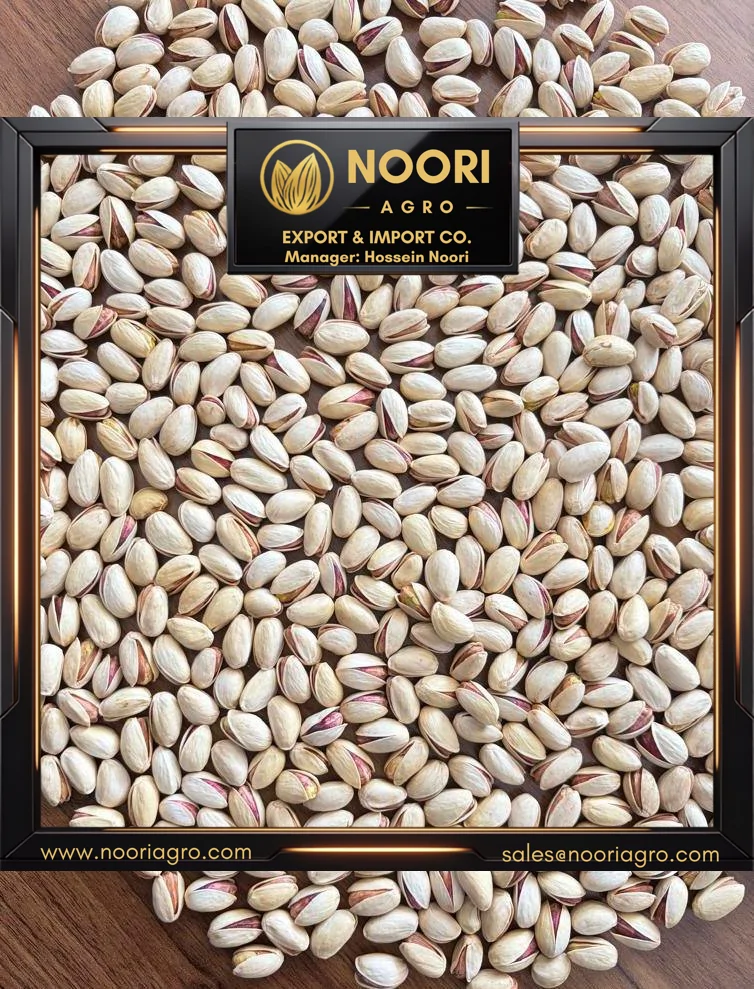
Iranian Ahmad-Aghaei and Badami Pistachios
# Ahmad Aghaei and Badami (Almond-Shaped) Iranian Pistachios | Wholesale, Specifications, and Export
Iranian pistachios are among the country's most well-known agricultural products in international markets. The diversity of varieties, excellent flavor, high-quality kernels, and availability in various sizes and packaging options make Iranian pistachios highly significant for consumers, importers, wholesalers, and the food industry.
Among the various types of Iranian pistachios, the **Ahmad Aghaei** and **Badami** (almond-shaped) varieties bear a strong resemblance to one another due to their elongated shape, relatively large size, and almond-like form. Because of these visual characteristics, the two terms are sometimes used interchangeably or mentioned together in market discussions and trade transactions.
In this article, we will explore the specifications of Ahmad Aghaei pistachios, the concept behind "Badami" pistachios, their physical characteristics, sizing, applications, and key considerations for wholesale purchasing and exporting.
## What Are Ahmad Aghaei Pistachios?
Ahmad Aghaei is a well-known commercial variety of Iranian pistachio, highly valued in both domestic and export markets for its elongated shape and relatively large size.
The key features of Ahmad Aghaei pistachios include:
- An elongated and relatively long shape.
- An attractive, almond-like appearance.
- A light-colored shell.
- A desirable flavor and a delicious kernel.
- Availability in various sizes.
- Versatile use in the nut and dried fruit market, as well as the food industry.
This variety is cultivated in Kerman Province and several other regions of the country, serving as a significant product within Iran's pistachio export portfolio.
## What Are "Badami" (Almond-Shaped) Pistachios, and How Do They Relate to Ahmad Aghaei Pistachios? The term "almond-shaped" (*badami*) is typically used to describe pistachios with an elongated shape resembling an almond. The Ahmad Aghaei variety also features this same elongated, almond-like appearance.
Consequently, in commercial descriptions, Ahmad Aghaei pistachios may be categorized under the "almond-shaped" group.
It is important to note that while "Ahmad Aghaei" refers to a specific pistachio cultivar, "almond-shaped" serves as a descriptive term for the product's physical appearance. Thus, although the two terms are closely related in terms of visual characteristics and market terminology, they do not necessarily represent the same cultivar within all agricultural classification systems.
For wholesale purchases and exports, it is advisable to precisely specify the cultivar, size, kernel quality, and shipment details in the contract and the product specification sheet.
## Physical Characteristics of Ahmad Aghaei and Badami Pistachios
One of the reasons for the popularity of the Ahmad Aghaei pistachio is its distinct appearance compared to rounder varieties, such as the Fandoghi and Kaleh Ghoochi.
This variety typically features elongated and relatively large kernels. Its hard shell is light-colored, and when naturally ripened, a significant proportion of the nuts are "open-mouthed" (split).
Key physical characteristics include:
- An elongated, almond-like shape
- A light-colored hard shell
- A flavorful kernel
- A variety of sizes
- Availability in raw, salted, or roasted forms
Uniformity in appearance, the rate of natural splitting, the condition of the shell, and the quality of the kernel are all critical factors in the commercial assessment of this product.
## Sizing of Ahmad Aghaei Pistachios
Pistachios intended for export are graded based on the number of nuts per ounce. In this system, a lower count generally indicates larger nuts.
Common sizes for Ahmad Aghaei pistachios include the following:
| Size | Description |
|---|---|
| 20–22 | Very large nuts |
| 22–24 | Large nuts |
| 24–26 | Medium-to-large nuts |
| 26–28 | Medium nuts |
| 28–30 | Smaller nuts |
| 30–32 | Small nuts |
Available sizes may vary depending on the specific harvest, the year of production, and supply conditions. For export orders, the exact size must be specified at the time of purchase.
## Cultivation Regions for Ahmad Aghaei Pistachios in Iran
Kerman Province is one of the most significant regions for pistachio production in Iran. Counties such as Rafsanjan, Anar, Zarand, and Sirjan are well-known within Iran’s pistachio market.
In addition to Kerman, the Ahmad Aghaei variety of pistachio is also cultivated in certain areas of Khorasan province.
Climatic conditions, soil quality, irrigation management, and the timing of the harvest all influence the final quality of the product. For this reason, when purchasing pistachios in bulk, one should examine the actual quality of the shipment, rather than relying solely on the region of origin.
## Uses of Ahmad-Aghaei and Badami Pistachios
Due to their elongated shape and high market appeal, Ahmad-Aghaei pistachios are utilized across various sectors of the food industry and the dried nut market.
Key applications include:
1. Sale as a snack (nuts and dried fruits)
2. Production of salted and roasted pistachios
3. Retail and store-shelf packaging
4. Use in confectionery and pastry making
5. Production of chocolate products and desserts
6. Use in the ice cream and food processing industries
7. Supply for export and wholesale markets
In addition to in-shell pistachios, shelled kernels and derivatives—such as slivered pistachios, pistachio powder, and pistachio paste—are also used in the food industry.
## Wholesale Purchasing of Ahmad-Aghaei and Badami Pistachios
Wholesale buyers and importers should consider several key characteristics when selecting Ahmad-Aghaei pistachios. Large nut size or a light-colored shell alone is not sufficient to determine export-grade quality.
Important purchasing criteria include:
- Variety and origin (production location)
- Nut size and uniformity
- Ratio of open-shell (split) to closed-shell pistachios
- Prevalence of empty shells or defective nuts
- Quality and color of the kernel
- Moisture content
- Hygienic and microbiological safety
- Aflatoxin levels
- Processing method and packaging
For export orders, conducting quality control tests and ensuring compliance with the standards of the destination country is crucial. In particular, aflatoxin levels must meet the specific requirements of the importing market.
## Exporting Iranian Ahmad-Aghaei Pistachios
Ahmad-Aghaei pistachios are a prime product for the export market. Its elongated appearance, diverse sizing, and suitability for various processing methods make it well-suited for the nut market and the food industry.
Exporting this product requires careful attention to the regulations of the destination country, sanitary requirements, necessary certifications, packaging quality, and shipping conditions.
Pistachios may be supplied in bulk or in specialized packaging. For wholesale orders, details such as the type of packaging, net weight, shipment specifications, and information regarding production and processing must be accurately documented.
Furthermore, the final export price is determined based on factors including size, quality, the percentage of split shells, aflatoxin levels, order volume, and delivery terms.
v
## Nutritional Value of Pistachios
Pistachios are a source of plant-based protein, unsaturated fats, fiber, vitamins, and minerals.
Based on the provided nutritional data, the following approximate values are reported per 100 grams of pistachios:
| Nutrient | Amount |
|---|---:|
| Energy | 594 kcal |
| Protein | 19.3 g |
| Total Fat | 56 g |
| Carbohydrates | 19 g |
| Potassium | 972 mg |
| Calcium | 131 mg |
| Magnesium | 158 mg |
| Iron | 7.3 mg |
| Vitamin B6 | 1.7 mg |
Nutritional values may vary depending on the cultivar, production conditions, and processing methods; therefore, for the definitive specifications of a commercial product, the nutritional analysis of the specific shipment should be used as the reference.
## Frequently Asked Questions About Ahmad-Aghaei and Badami Pistachios
### Are Ahmad-Aghaei pistachios the same as Badami pistachios?
Ahmad-Aghaei pistachios are elongated and almond-shaped in appearance. While these two terms are sometimes used interchangeably in the market, "Ahmad-Aghaei" refers to a specific cultivar, whereas "Badami" (meaning "almond-like") is a descriptive term for the shape of the nut.
### What are the physical characteristics of Ahmad-Aghaei pistachios?
These pistachios feature elongated, relatively large kernels and a light-colored, hard (bony) shell. Due to their attractive appearance, they are highly sought after in the export market.
### What are the export-grade sizes for Ahmad-Aghaei pistachios?
Common sizes include 22-24, 24-26, 26-28, 28-30, and 30-32. The exact sizes depend on the specifications of the specific shipment.
### In which regions of Iran is the Ahmad Aghaei pistachio produced?
Kerman Province is a major production hub for this variety; it is also cultivated in certain parts of the Khorasan region.
### What factors should be evaluated when purchasing Ahmad Aghaei pistachios in bulk?
Key criteria for evaluation include size, the percentage of naturally split shells, kernel quality, moisture content, overall product integrity, aflatoxin levels, and the type of packaging.
## Conclusion
The Ahmad Aghaei pistachio is a significant commercial variety in Iran. Due to its elongated, almond-like shape, light-colored shell, and desirable flavor, it holds a strong position in both domestic and export markets.
The term "almond-shaped" (*badami*) is also used to describe the appearance of these pistachios. For bulk purchasing and exports, it is crucial to distinguish between the specific variety name and the product's physical description, as well as to carefully examine the quality specifications of the shipment.
Selecting a product tailored to the needs of the destination market—ensuring appropriate sizing, rigorous quality control, and standard packaging—is essential for the successful supply of Iranian pistachios to international markets.
August – September
24 months
20 ton
Kerman, Iran,mashhad,tabriz,
Varieties Available
- In-shell
- Kernels
Packaging Options
- Bulk industrial containers
- vacuum pouches
- carton boxes
- retail-ready packages
- private label — customer preferred packaging
Related Products
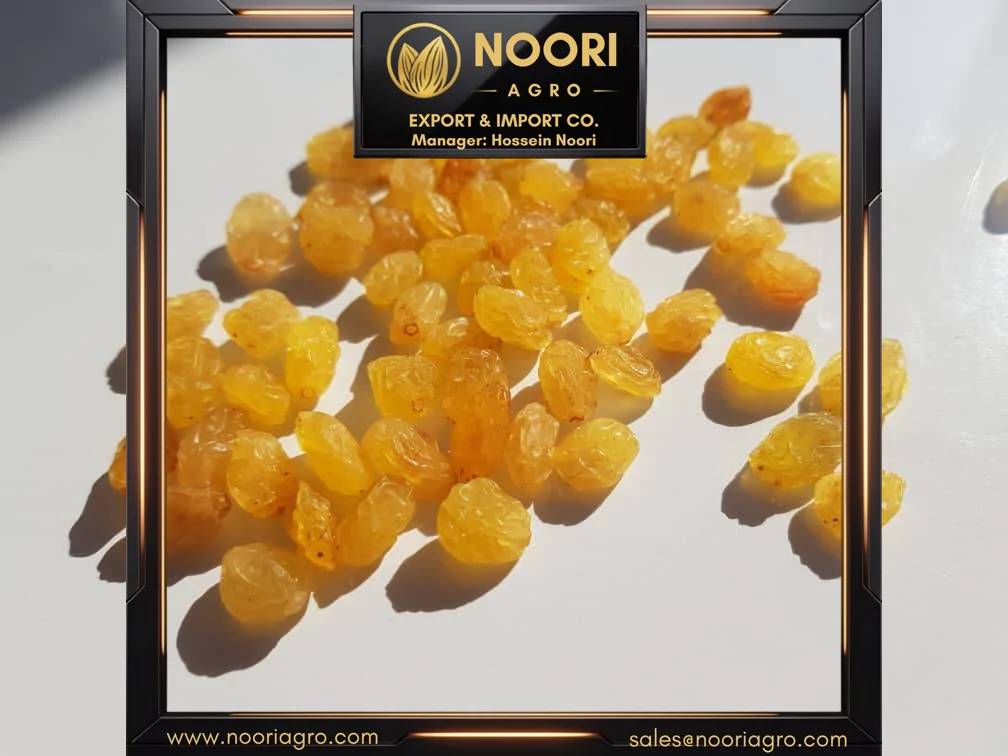
Golden Raisins
Golden (sun-dried) raisins from the vineyards of Bonab—natural, sweet, and processed to export standards.

Fresh Apples & Pomegranates
Iranian apples and pomegranates—export-grade quality—sorted and shipped with cold-chain logistics.
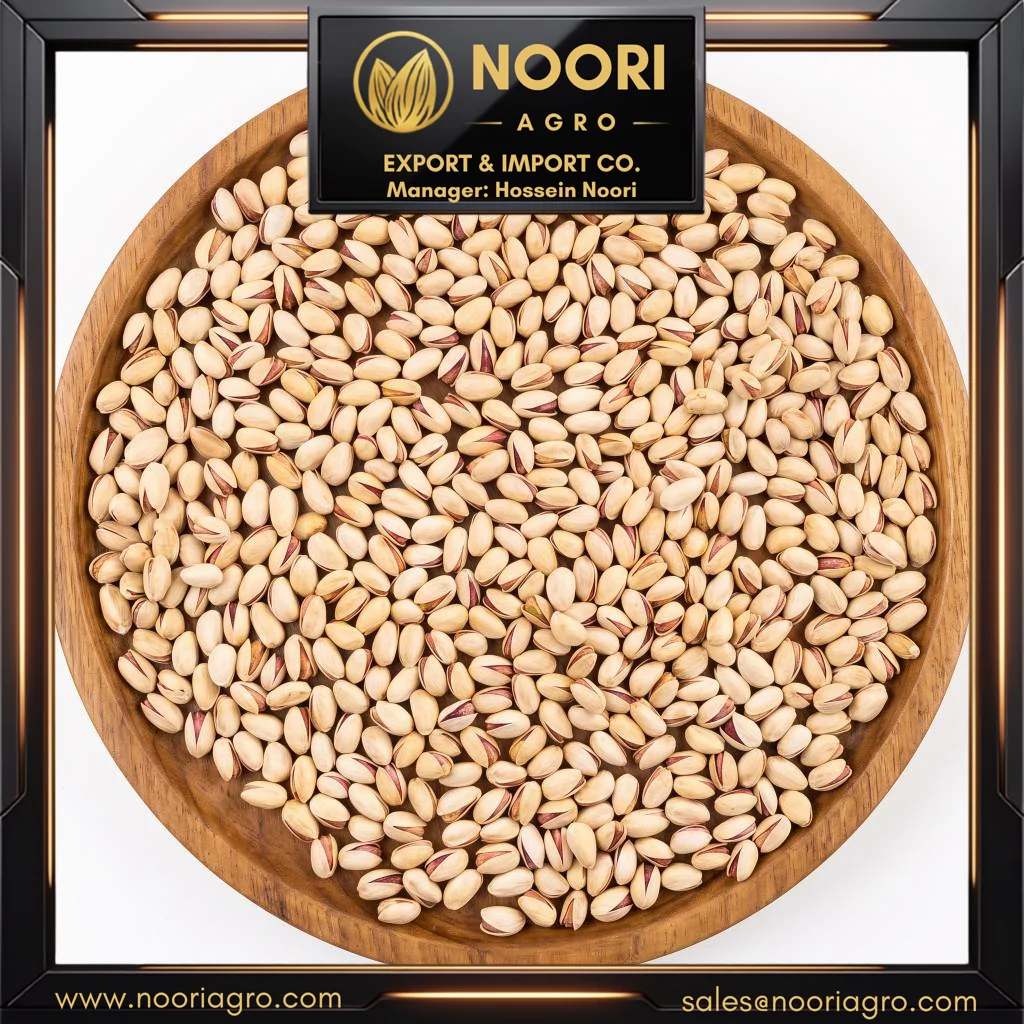
Akbari Pistachio
Premium long Iranian Akbari pistachios, available in-shell and as kernels, sourced directly from the manufacturer.
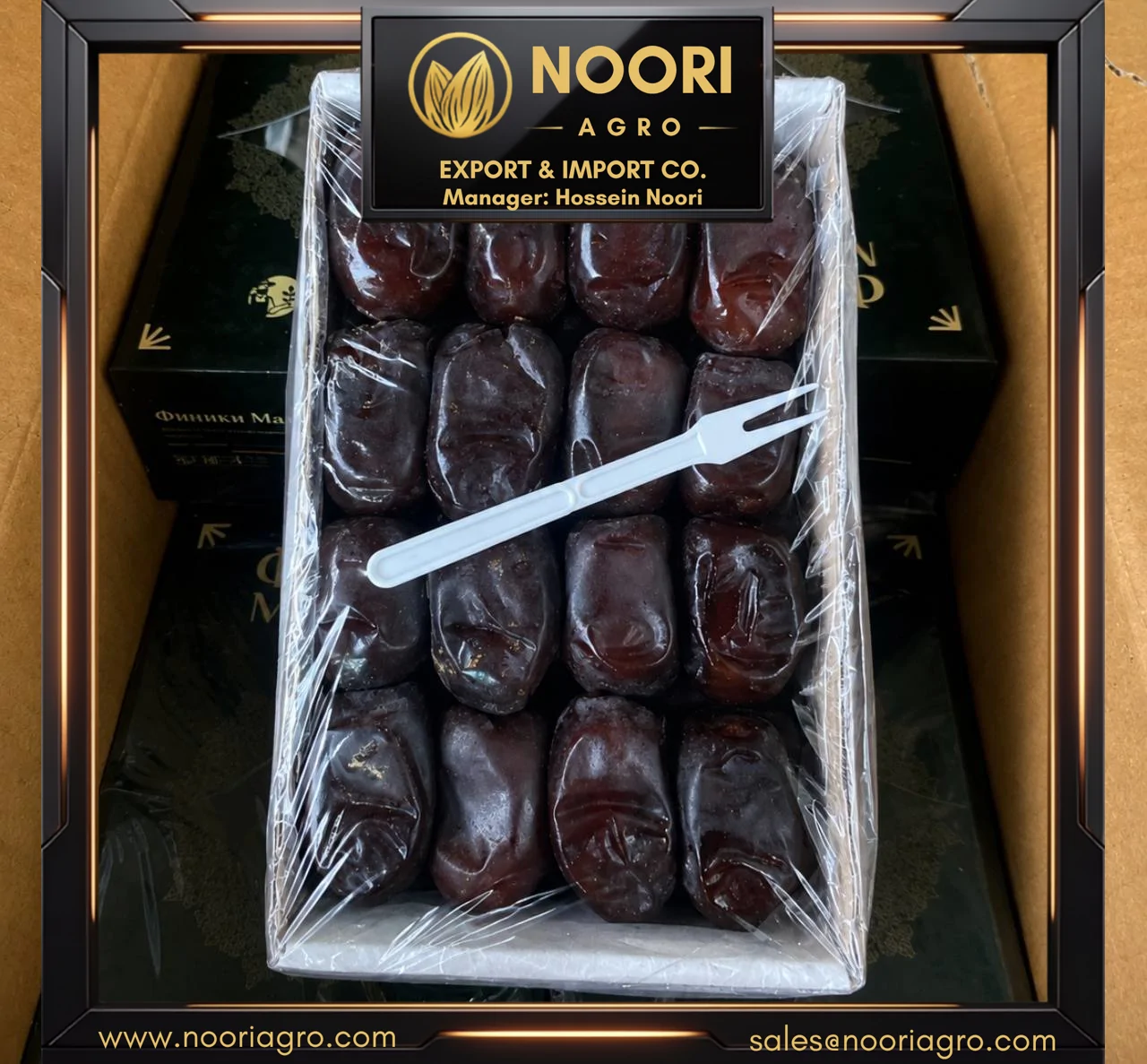
Mazafati Dates
Mazafati dates: fresh, semi-moist dates with a soft texture, thin skin, and relatively high moisture content.